
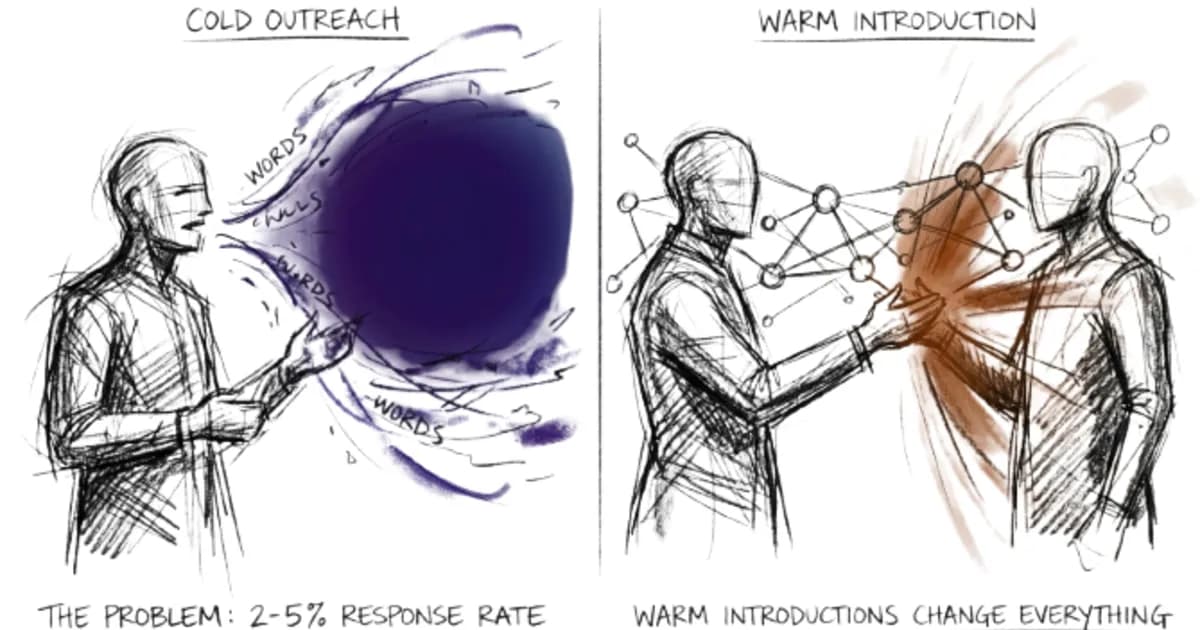
Every executive recruiter has experienced it: you craft the perfect outreach email to a C-suite decision-maker, and it disappears into the void. No response. No callback. Just silence.
The problem isn't your message. It's the channel. Cold outreach to senior executives has a response rate that hovers around 2 to 5 percent. But warm introductions — reaching out through a mutual connection — flip those numbers entirely.
Why Cold Outreach Is Failing
Senior executives are drowning in unsolicited messages. A typical CEO or CHRO receives dozens of recruitment-related emails per week, most from firms they've never heard of. The natural response is to ignore everything that doesn't come from a trusted source.
This creates a paradox for search firms: the most valuable decision-makers are the hardest to reach through traditional channels. The firms that break through consistently aren't writing better emails — they're finding better paths to the conversation.
The Power of the Warm Path
A warm introduction changes the entire dynamic of an initial engagement. When a trusted colleague says, "You should talk to this search firm," the response rate jumps from single digits to 40 percent or higher. The trust transfers.
But identifying warm paths has traditionally been a manual, time-consuming process. You check LinkedIn connections, ask around the office, review old deal files, and hope someone remembers a relevant contact. This approach works occasionally, but it doesn't scale.
Mapping Your Firm's Hidden Network
The reality is that most search firms are sitting on far more relationship capital than they realize. Your partners, consultants, and associates collectively know thousands of people. The problem isn't a lack of connections — it's a lack of visibility into those connections.
Modern network intelligence tools can map your entire firm's relationship footprint, scoring the strength of each connection and identifying multi-hop paths to target decision-makers. Instead of asking "Does anyone know the CEO of Company X?" you can instantly see that your senior partner served on a board with someone who reports directly to that CEO.
Network TrustScore: Quantifying Relationship Strength
Not all connections are equal. A LinkedIn connection from 2015 that you've never spoken to is very different from a former colleague you worked with for three years. Effective network mapping needs to account for relationship depth, recency, and context.
A TrustScore approach assigns numerical values to connections based on multiple factors: how long you've known someone, how recently you've interacted, whether you've worked together directly, and how many shared connections you have. This transforms a messy web of contacts into a prioritized map of your most actionable relationships.
Multi-Hop Introductions
Sometimes the most valuable path to a decision-maker isn't a direct connection but a two or three-hop chain. Your associate knows a board member who knows the CHRO who's about to launch an executive search. That multi-hop path, when identified and activated properly, can be just as effective as a direct introduction.
The key is knowing these paths exist before you need them. When you combine network mapping with predictive intelligence — knowing which companies will need executive talent soon and who in your network can get you in the door — you've created something far more powerful than either capability alone.
Building a Warm-First Culture
Transitioning from cold outreach to warm introductions isn't just a technology change; it's a cultural shift. It means training your team to think about relationship paths before reaching for the phone. It means systematically building and maintaining connections with potential referral sources. And it means measuring success not just by placements made, but by the quality and warmth of initial engagements.
The firms that master warm-path engagement won't just win more mandates. They'll win better mandates — the kind that come with deeper trust, longer relationships, and repeat business.